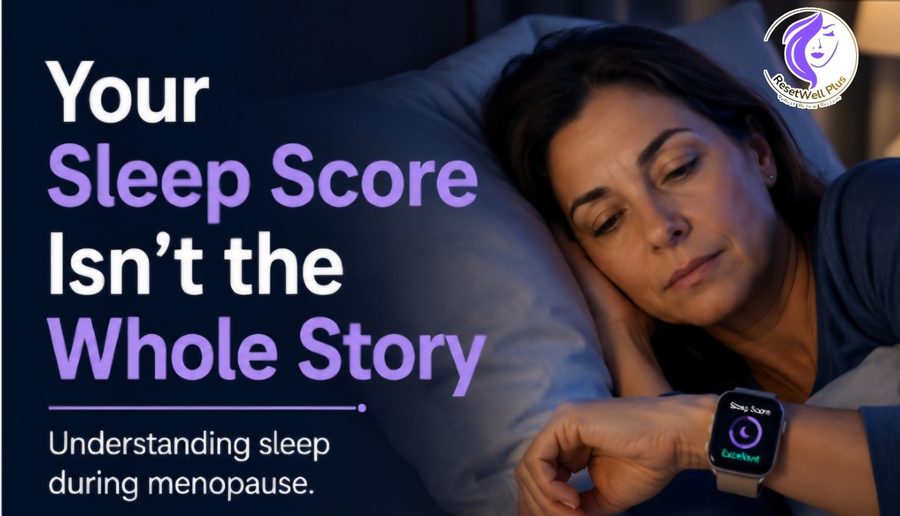
When Your Sleep Score Says “Great” But You Feel Exhausted
Do you remember having those moments when you feel extremely exhausted from a sleepless night and you look at your sleep score on your device to discover it is extremely high? This situation is quite frequent for many women in perimenopause and menopause. Even though fitness trackers may give you valuable information regarding your sleep, hormonal changes may be neglected when evaluating sleep quality.
What Changes During Menopause?
Sleep is a function of hormones, particularly estrogen and progesterone, that serve a critical role in balancing your body’s internal clock. Estrogen and progesterone levels vary and drop throughout perimenopause and menopause, causing insomnia for many women.
Some common symptoms caused by this include night sweats, hot flushes, anxiety, frequent awakenings, and early morning awakening. You may have plenty of time spent resting in bed, yet these interruptions will cause you not to feel well-rested. It explains why sleeping problems experienced during menopause tend to go beyond a gadget’s measuring capacity.
What Do Sleep Trackers Actually Measure?
In general, sleep trackers and wearables calculate your sleep based on factors like body movement, heart rate, respiratory rates, and HRV. As a result, they provide such information as the duration of your sleep, approximate sleep cycles, and a sleep score.
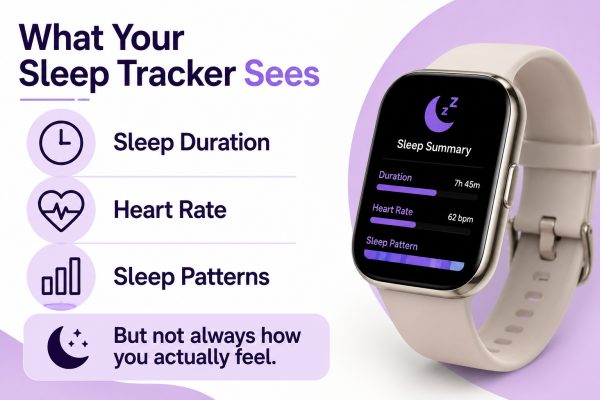
These pieces of information may be helpful for recognizing patterns in your sleep but, at the same time, you should keep in mind that they do not measure your brain waves. Unlike a clinical sleep study, a device worn on your body cannot assess your sleep quality accurately, especially in case of menopausal hormonal shifts.
Why Sleep Scores Can Be Misleading During Menopause
Even if you get a high score, it does not necessarily imply having a restful night’s sleep particularly during the menopause period. Sleep trackers are made to identify common sleep patterns, but they may overlook many menopause-related changes that affect how you feel the next day.
For example, short-term waking up during the night due to hot flushes and night sweats might have no substantial influence on your sleep score if you go back to sleep immediately, although such interruptions will certainly make you tired the following day.
Also, hormonal changes will affect your mood, level of stress, and overall level of energy in a way that could not be detected with the help of a sleep tracker. You could have been sleeping for seven or even eight hours, but in case your sleep was not restful, you would feel confused, tired, or unable to concentrate.
Most importantly, the sleep tracking algorithms are trained based on information from the general public, not from the specific groups of people experiencing perimenopause and menopause, which means the numbers on your wrist may not always reflect what’s actually happening in your body.
What Matters More Than the Number
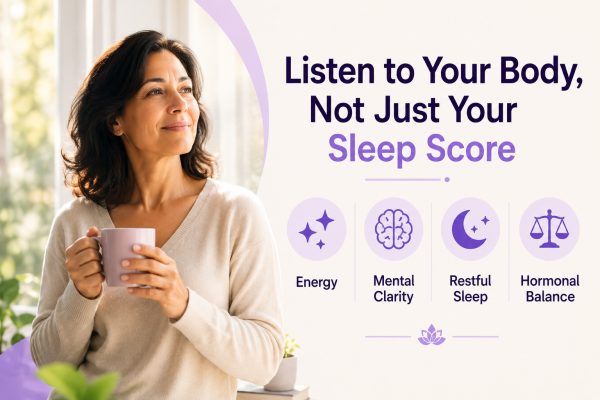
Your sleep score can serve as an additional indicator for your sleeping quality, but it shouldn’t define how well you slept. It is important to evaluate your feelings during the entire day: do you wake up fresh? Do you have sufficient energy to cope with everyday tasks? Are brain fog, tiredness, or daytime drowsiness becoming common?
The combination of your symptoms with your sleep data can give you a better picture about your sleep in menopause. Your body can give you signals that a tracker can’t.
Supporting Better Sleep During Menopause
No sleep tracking device alone can affect your sleep in any way; however, little adjustments you can make in your lifestyle may lead to positive results. Sticking to regular bedtimes, keeping your bedroom cool, avoiding caffeine at night, and establishing a sleep-inducing routine can contribute to good sleep quality. Exercise and stress relief can also support better rest during menopause.
If insomnia persists and begins affecting your daily activities, consulting a doctor can be beneficial. Sleep disturbances can sometimes occur due to hormonal changes that need to be evaluated properly.
Conclusion
Sleep trackers may be handy gadgets, but sometimes the readings aren’t always accurate and complete, especially during perimenopause and menopause. If your sleep tracker tells you that you have been getting a good night’s rest, but your body tells a different story, don’t ignore how you feel.
At ResetWell Plus, we believe understanding your hormones is the first step toward better sleep and better health. If you’re struggling with ongoing menopause symptoms, seeking the right guidance can help you move beyond the numbers and focus on what truly matters, feeling your best.
Because better sleep isn’t about chasing a perfect sleep score, it’s about waking up feeling like yourself again.