Imagine waking up in the middle of the night soaked with sweat. It is not just frustrating; it completely disrupts your sleep cycle. Your immediate reaction is probably to crank the AC temperature down into the arctic zone. But turning your bedroom into a deep freezer isn’t a wise solution at all, and the reason may surprise you.
While the room air might seem ice-cold, your bedding can trap body heat, providing absolutely no respite despite a chilled room. You will still sweat underneath the covers while waking up with a freezing nose and toes.
This phenomenon is incredibly common for women going through menopause. Sudden heat surges cause a rush to lower the thermostat as quickly as possible. Normally, our bodies naturally manage temperature through a process called thermoregulation. However, during menopause, hormonal disruptions trigger severe night sweats, leaving you desperate for a drastic temperature drop.
Support Your Body from the Inside Out
While adjusting your external environment is crucial, managing menopausal night sweats works best when you address the internal hormonal shift. ResetWell Plus is expertly formulated to support hormonal balance, helping to reduce the frequency and intensity of hot flashes and night sweats naturally, so you can stop fighting the thermostat and start sleeping through the night.
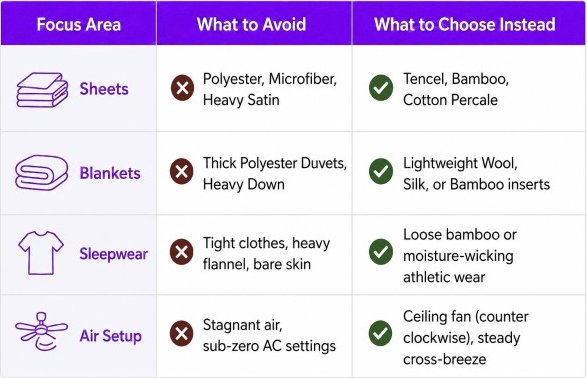
Here is how to optimize your bedroom environment without turning your AC into a freezer:
1. Switch to Highly Breathable Bedding
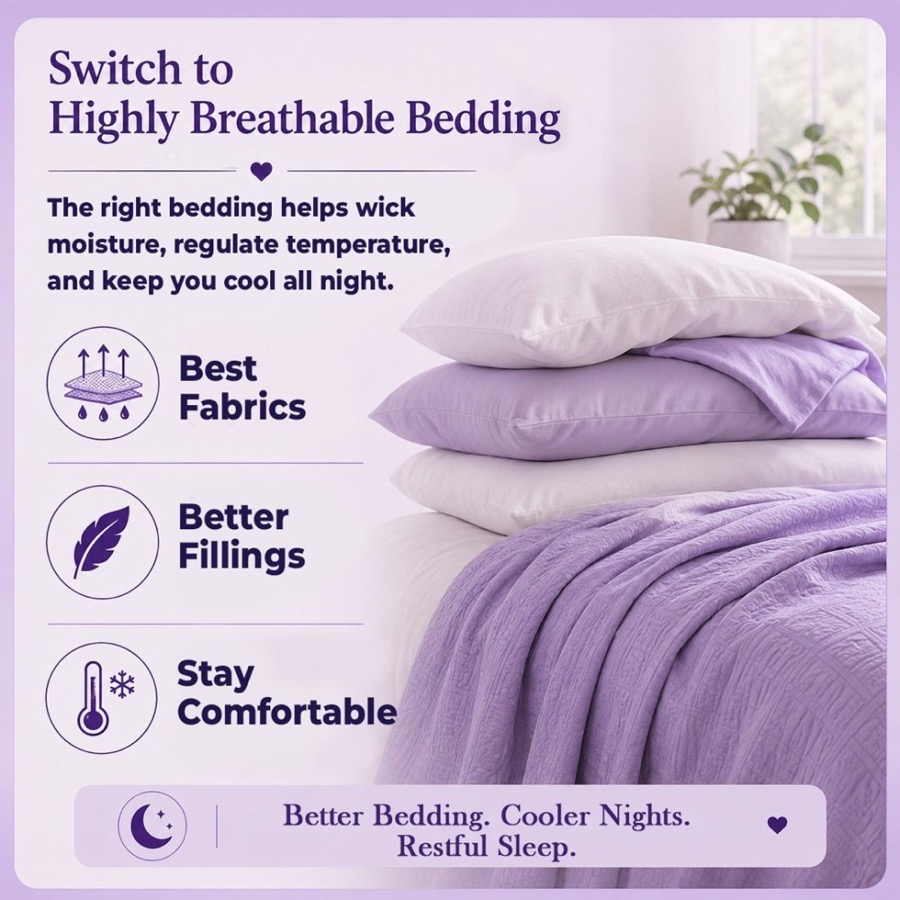
The most common mistake we make is setting an extreme room temperature for immediate relief. However, the real culprit of night sweats is often the microclimate inside your blanket. Synthetic fibres act like plastic wrap, trapping radiant body heat and ambient humidity.
Instead, choose sheets made of 100% Tencel, bamboo lyocell, or long-staple cotton (percale weave). Tencel and bamboo are excellent at absorbing moisture and pulling it away from your skin, which accelerates evaporative cooling. Additionally, consider swapping your synthetic duvet for a lightweight wool, silk, or bamboo-filled comforter. A widespread misconception about wool is that it only keeps you hot; in reality, it acts as a masterful temperature regulator that can absorb up to 30% of its weight in moisture without feeling damp, keeping you perfectly dry.
2. Maintain Maximum Airflow
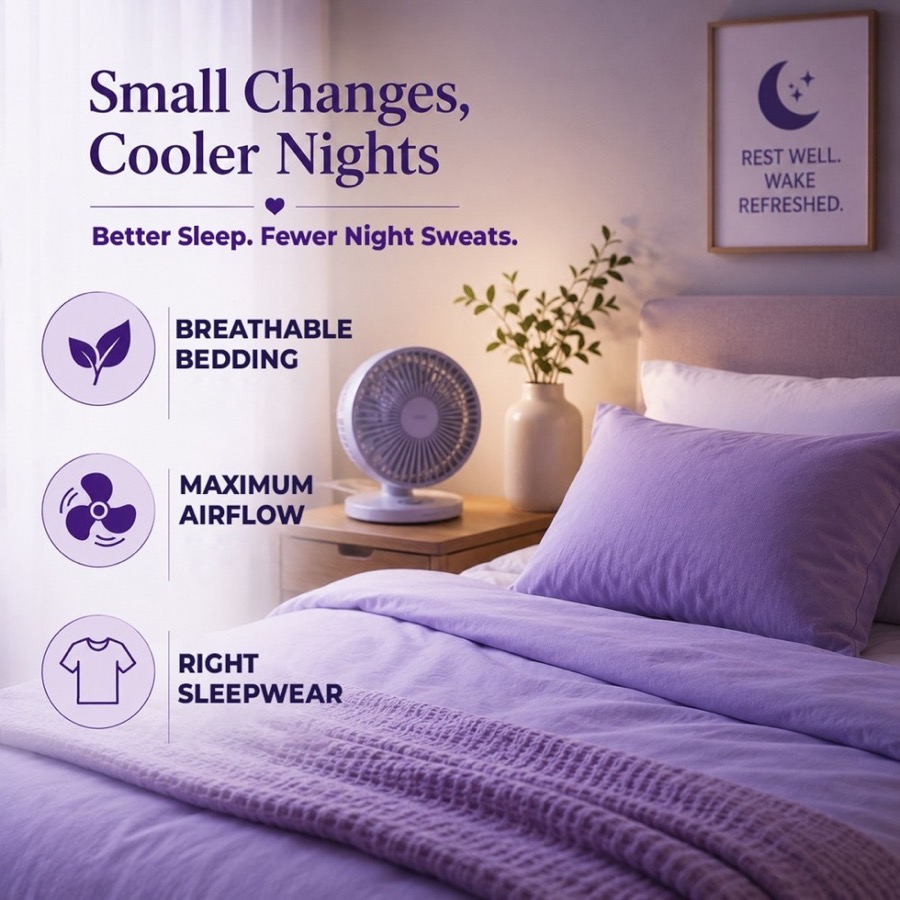
Air conditioning drops the room’s temperature but leaves the air stagnant, which does not help evaporate night sweats. Moving air, on the other hand, promotes convective cooling, which helps sweat evaporate off your skin at a much faster rate.
Ensure that your ceiling fan is rotating counter-clockwise to push a column of air straight down, creating a cooling wind-chill effect without needing to lower the thermostat reading. You can also place an oscillating floor fan near a window or door to keep air circulating smoothly across the entire bed, rather than blowing directly onto a single, sensitive area of your body.
3. Choose the Right Sleepwear
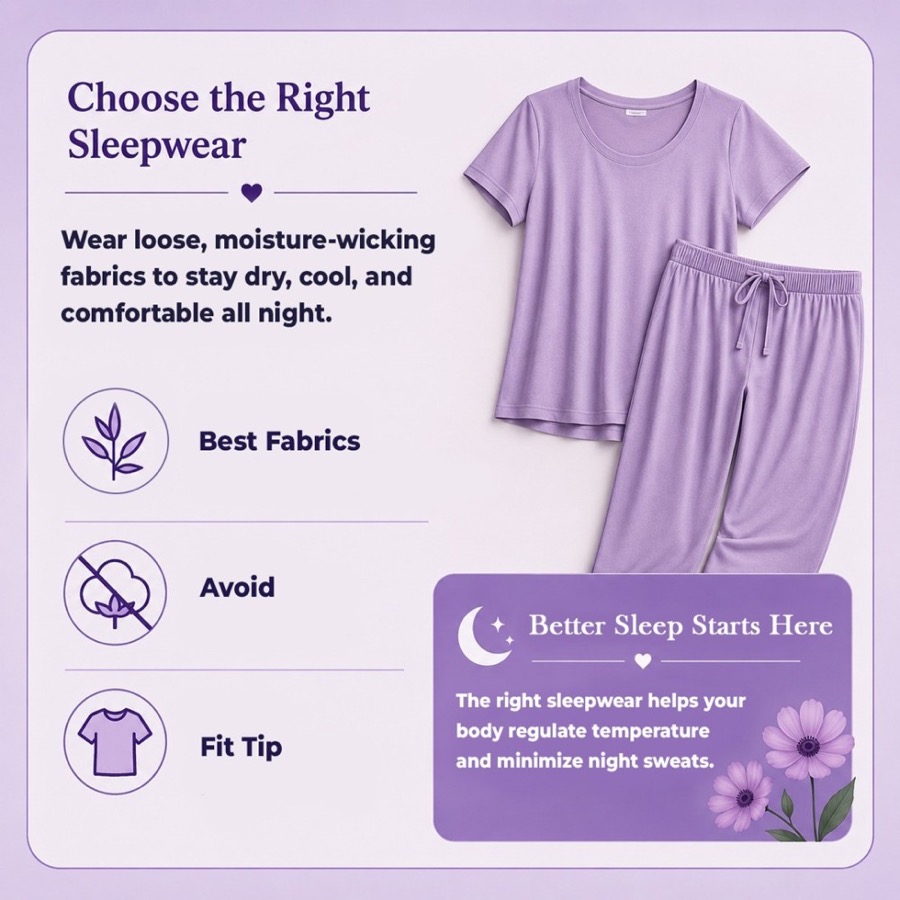
In many Western countries, sleeping naked is popular and often considered a quick fix for heavy night sweats. However, this isn’t always the best strategy. Without a layer of fabric to absorb initial moisture, sweat simply pools on your skin, leaving you feeling sticky and clammy.
Wear loose garments made from moisture-wicking fabrics like lightweight pajamas made of bamboo, modal, or specialized athletic wicking blends. Avoid 100% cotton and pure silk for severe sweating. While cotton is great for sheets, cotton pajamas hold onto moisture once soaked, leaving you wet and cold. Pure silk can be easily damaged by heavy sweat and completely loses its breathability when wet.
Take Control of Your Sleep Journey
Optimizing your sheets and fans handles the external environment (and remember that a sleep tracker only tells part of the story), but sustainable relief from menopausal night sweats happens when you support your body from within.
If you are ready to wake up feeling rested, dry, and balanced, pair these bedroom changes with ResetWell Plus, your daily partner in cooling down hot flashes and reclaiming your deep sleep cycle.
Quick Note on Internal Temperature Management
Your body’s core temperature actually needs to drop by about 1 to 2 degrees centigrade (2 to 3 degrees Fahrenheit) to initiate and maintain deep sleep cycles. Taking a warm (not hot) shower approximately 90 minutes before bed can paradoxically help combat night sweats. The warm water dilates the blood vessels in your hands and feet, which helps heat escape your core rapidly once you step out. This creates a natural, internal cooling cycle right as you hit your bed.