What if one of the key factors impacting brain health is not related to any dietary supplements or regular exercise programs, but rather exists in the hormonal balance of your body?
Although estrogen is generally perceived as a reproductive hormone, today’s science reveals that it has a profound impact on the brain’s operation and aging. The hormone impacts the brain in various ways and affects some crucial processes for brain health and longevity. For example, many women in their post-menopausal age experience symptoms like brain fog, forgetfulness or inability to concentrate, which suggests that there is definitely something going on and there is a connection between estrogen and brain aging.
1. What is Estrogen and Why Do I Need it for my Brain?
Estrogen is a hormone, usually associated with reproductive functions in females, but its effects go way beyond reproductive health. Estrogen impacts various systems in the body, acting on various organs, and the brain is one of them.
There are many estrogen receptors in specific areas of the brain like the hippocampus, responsible for the formation of memories and learning process, and the prefrontal cortex, playing an essential part in decision-making and solving problems. With the help of estrogen, the brain is able to keep up with good connections between nerve cells, which is important for brain functioning.
It is believed that the hormone affects mood and connectivity of neurons, and plays an important part in general functioning of the brain. One of the reasons why some women feel that their ability to concentrate decreases in perimenopause or menopause is due to changes in hormone levels.
2. The Science of Estrogen and Brain Aging
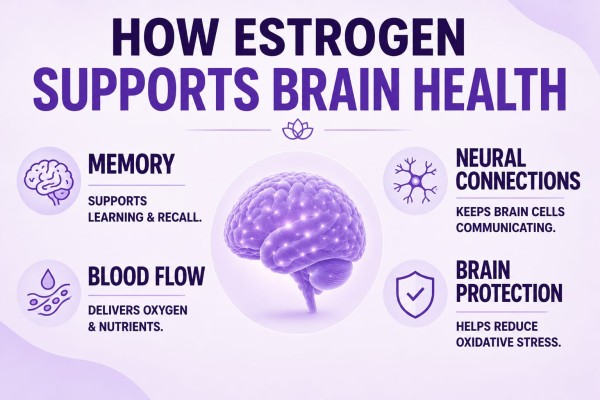
Estrogen is a female hormone associated with the process of brain aging because of its impact on the development of brain tissue. Estrogen is known to assist neurons to operate efficiently, improve synaptic contacts between neurons, and stimulate neuroplasticity, which is essential for the working of our brain. Moreover, studies indicate the impact of estrogen on providing adequate blood supply to the brain, thus, contributing to the healthy brain aging process.
In addition, this hormone affects the health of vessels of the central nervous system preventing brain cells from being damaged due to low oxygen and nutrition. Estrogen may have anti-inflammatory and anti-oxidative effects, which are also crucial to avoid negative impacts on the brain.
During menopause, there is a reduction of estrogen in the female body. It negatively affects women in terms of brain functioning: people experience brain fog, forgetfulness, inability to concentrate, and poor information processing skills. Scientists conduct research to understand the impact of hormones on brain aging, but today it is obvious that this hormone is very important for brain health.
3. What Research Says
An increasing number of research studies confirm that estrogen has a definite effect on brain health, especially during the process of menopause. According to the scientific literature, fluctuations and decrease in the level of this hormone can affect various cognitive functions such as memory, attention, and processing speed. This can be a cause for some difficulties in concentration and brain fogginess experienced by middle-aged women.
Scientists state that estrogen has a possible neuroprotective effect. It helps to ensure effective interaction of neurons, to maintain brain metabolism, and to prevent age-related damage to brain cells. In addition, some researchers claim that estrogen plays a significant role in maintaining the brain health of regions responsible for learning and memory, particularly the hippocampus.
At the same time, scientists note that the process of brain aging is determined by numerous factors. Apart from estrogen, genetic, cardiovascular, hormonal, sleep factors, and lifestyle contribute to the brain aging process.
4. Strategies for Maintaining Cognitive Functioning During Midlife
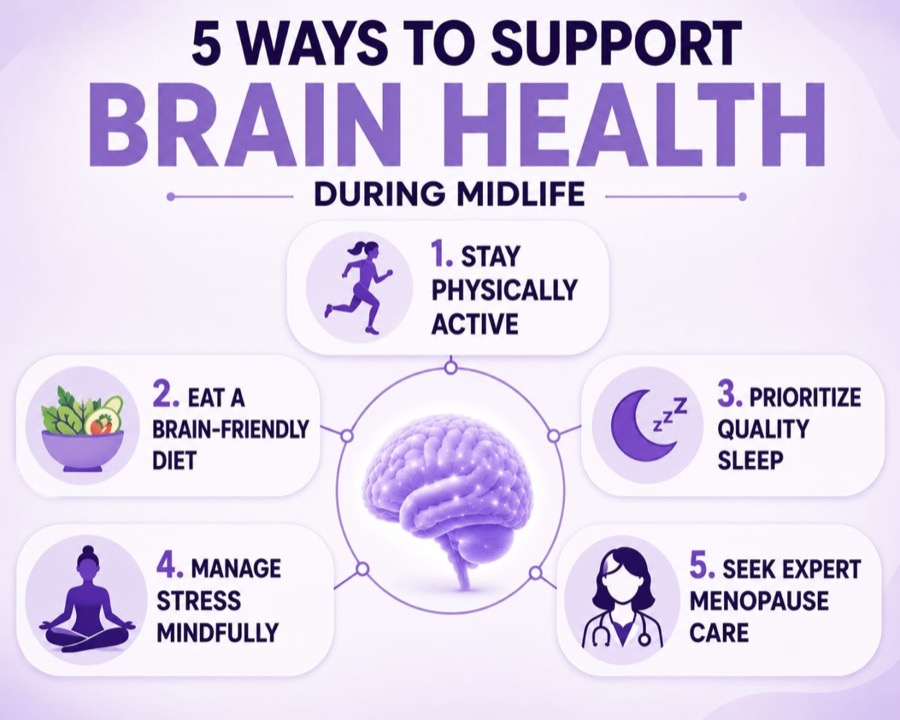
Although hormonal changes are inevitable and expected during this period, there are a number of measures that could be implemented in order to ensure strong brain health of women during their middle age years and beyond. Physical exercise is one of the best options in this situation, as it promotes better blood flow to the brain.
Proper nutrition is also crucial for brain health. A balanced diet that includes fruits, vegetables, complex carbohydrates, healthy fats, and protein is likely to provide enough nutrients for optimal brain functioning. It is equally important to ensure sufficient sleep, as the brain requires rest in order to consolidate memories and learn.
Mental health can be improved by engaging in mindfulness practices or other stress reduction techniques. Women who have difficulties with their hormones during the perimenopausal or menopausal phase can discuss potential solutions to the problem with a healthcare professional.
In order to improve brain health, it is important to implement healthy habits and to stay informed regarding changes happening in the body.
Conclusion
Connection of estrogen with brain aging demonstrates the importance of hormones for brain function in a woman throughout her lifetime. Although there may be symptoms of aging such as decline in memory and concentration during the menopausal period, knowing what is going on during this process will give women better chances to cope with it.
Despite ongoing research on estrogen and its role in the process of brain functioning, one should understand that a combination of several aspects is needed for healthy aging of the brain.
At ResetWell Plus we are committed to educate women based on evidence about menopause and women’s overall health. By promoting discussions about hormonal shifts and brain health in women, we strive to help women approach this phase of their life armed with knowledge.
If you’re experiencing symptoms such as brain fog, memory changes, or other menopause-related concerns, seeking timely guidance can make a meaningful difference. Connect with the experts at ResetWell Plus to learn more about personalized menopause care and strategies to support your long-term brain and overall well-being.