When we talk about menopause, the conversation usually centres around hot flashes, night sweats, and mood swings. But there is a painful, deeply frustrating symptom flying under the radar that blindsides thousands of women in midlife: frozen shoulder.
If you have suddenly found it agonizing to reach for a seatbelt, fasten your bra, or simply sleep on your side, you are not alone. There is a direct, biological link between plunging hormone levels and stiff, locked joints.
What is a Frozen Shoulder?
Medical professionals call it adhesive capsulitis. It occurs when the flexible connective tissue capsule surrounding your shoulder joint becomes severely inflamed, thickens, and tightens. This creates tight bands of scar tissue called adhesions, drastically restricting your range of motion.
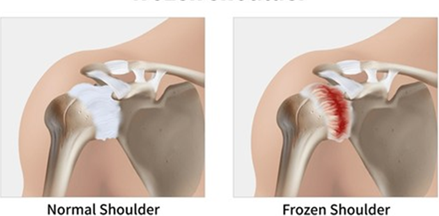
What many women do not realize is that frozen shoulder peaks significantly between the ages of 40 and 60, aligning perfectly with perimenopause and menopause.
The Oestrogen Connection: How Hormone Loss Attacks the Joints
Oestrogen is far more than a reproductive hormone; it is a natural anti-inflammatory agent and a vital protector of your musculoskeletal system. Here is exactly how dropping oestrogen levels trigger the “freeze”:
1. The Breakdown of Collagen
Oestrogen regulates collagen production, the primary building block of tendons, ligaments, and joint capsules. As oestrogen levels plummet, collagen production drops. This causes the connective tissue in your shoulder to lose its elasticity, becoming brittle, stiff, and highly prone to micro-tearing.
2. Spiking Inflammation
Oestrogen acts as a natural brake on systemic inflammation. When it disappears, your body’s inflammatory pathways go into overdrive. The shoulder joint capsule reacts to this systemic shift by becoming highly inflamed, kicking off the painful thickening process.
3. Reduced Joint Lubrication
Your joints rely on synovial fluid to stay lubricated and move smoothly. Oestrogen helps maintain the hydration of these tissues. Without it, joints become drier, increasing internal friction and making movement stiff and painful.
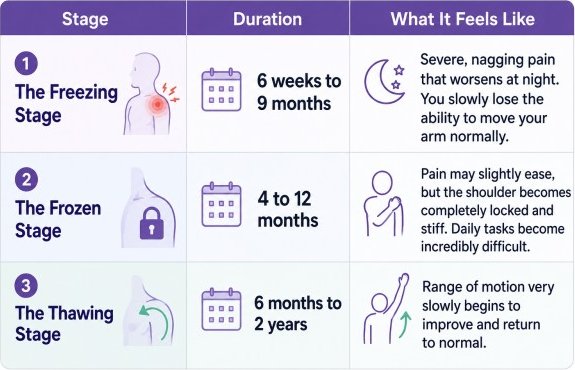
The Three Stages of a Frozen Shoulder
A menopausal frozen shoulder typically progresses through three distinct, grueling phases:
Actionable Steps: How to Defrost Your Shoulder
If you are battling menopausal joint pain, a proactive approach can significantly shorten the recovery timeline:
- Consult a Specialist: speak with an informed healthcare professional about Hormone Replacement Therapy (HRT). Replacing missing oestrogen can target the root cause of systemic inflammation and tissue dryness.
- Targeted Physical Therapy: avoid aggressive forcing, which worsens inflammation. Focus instead on gentle, passive range-of-motion exercises like pendulum swings and wall slides to prevent further tightening.
- Anti-Inflammatory Nutrition: load up on omega-3 fatty acids (found in salmon, walnuts, and flaxseeds) and antioxidants like turmeric and ginger to combat systemic joint inflammation from the inside out.
- Heat and Cold Therapy: use moist heat pads before stretching to relax the joint capsule, and apply ice packs after movement to calm down localized nerve irritation.
Take Control of Your Midlife Health Journey
Your joints do not have to be collateral damage to hormonal changes. Recognizing that your shoulder stiffness is tied to your hormones is the first step toward finding the right treatment and regaining your mobility.
Follow ResetWell Plus to learn more about navigating menopause with strength, clarity, and vitality.